
| Alignment: | Nuetral-Evil | |
| Sphere of Influence: | Poison, Alchemy, Betrayal, Subtle Death | |
| Symbol: | Poison, Alchemy, Betrayal, Subtle Death | |
| Allies | Lacenae (Deception), Svai (Darkness), Trengrue (War) | |
| Foes | Fay-Sei (Forgiveness), Gyu-Poi (Duty), Burgona (Vengeance), Laurits (Life) | |
| Domains | Death, Trickery, Evil |
Wai is the goddess of poison, subtle death, and whispered betrayal. Among the most cold and calculating of the divine host, she is the patient venom waiting in the cup, the kiss that brings silence, and the pact that ends in ruin. She is often invoked by those who prefer death to come in silence, or those seeking to punish betrayal with the same cold edge.
One of the cruel half-sisters of Burgona, Wai was among the trio who tormented their disfigured sibling. Her attempts to poison Burgona failed time and again, and many say her pride was permanently wounded by her sister's immunity. Since that time, Wai’s poisons have only grown more refined—more beautiful in their execution.
Legends say Wai was conceived when Nuvine dared Talos to drink a draught of death, and from the poison that burned through him, Wai was born.
She does not engage in direct confrontation, nor does she revel in chaos. Her actions are deliberate, measured, and final. Her temples are hushed places of ritual and alchemy, filled with glass vials, burning incense, and soft-spoken clergy.
Appearance
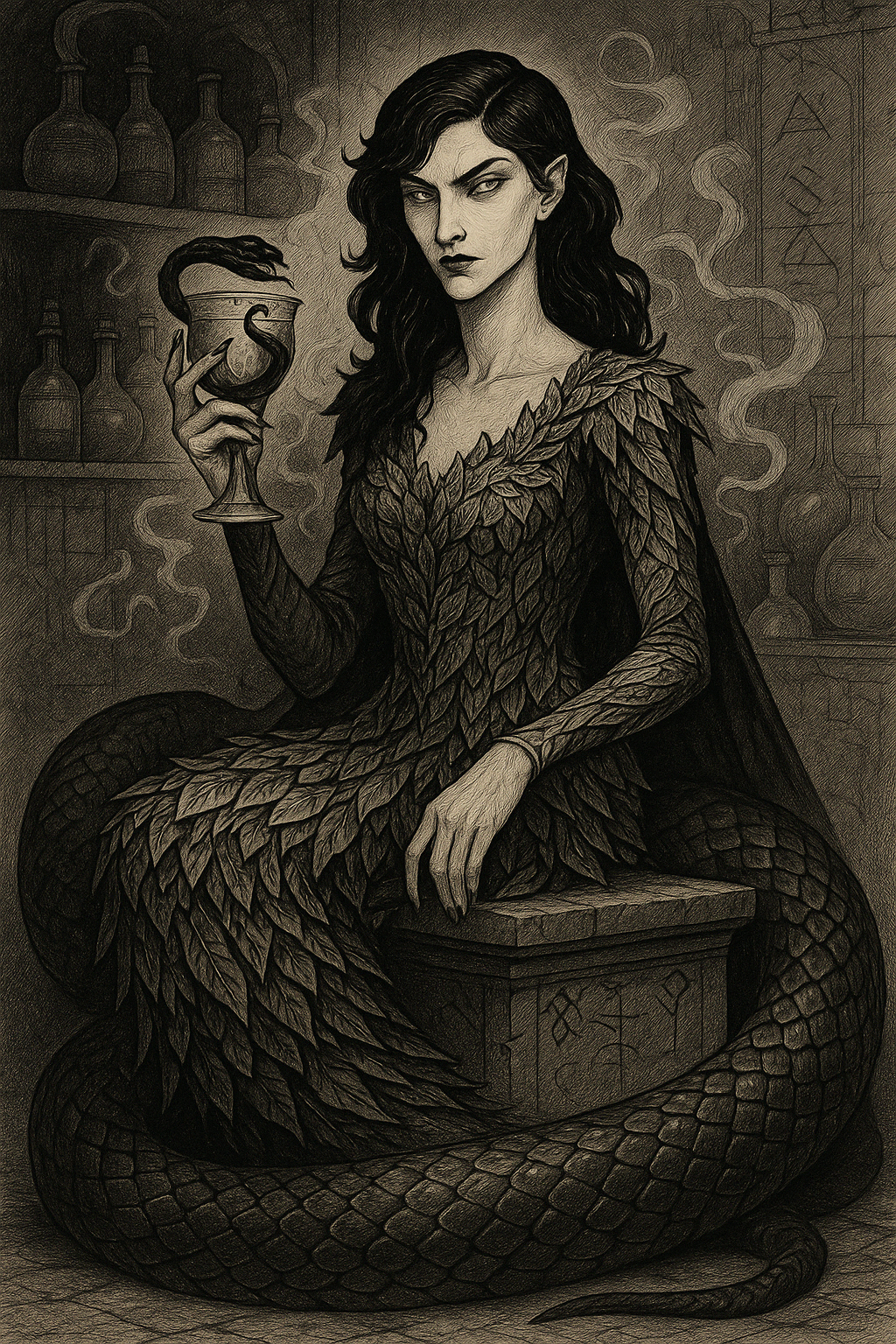
Wai is depicted as a graceful woman of androgynous beauty with sharp, angular features and obsidian black hair. Her eyes are slitted like a serpent’s, glowing faintly green. Her gown, made of interwoven leaves, petals, and scale-like fabric, constantly shimmers with venomous hues. In some depictions, her lower body is serpentine, wrapped around her altar.
Worship & Temples
Wai's worship is almost always secretive. Her temples are hidden in back alleys, deep woods, or beneath apothecaries. Her faith is banned in many cities due to its association with assassinations and political intrigue.
Temples often function as poisoner guilds or neutral grounds for alchemical exchange. Her sacred texts are etched in mirrored script or invisible ink, requiring specialized chemical solutions to read.
Clerics of Wai wear deep purple robes with black trim, adorned with silver serpent pendants. Their rituals often involve sacrifice via poison, bloodletting into cauldrons, or ceremonial distillations of rare venoms.
Wai is not worshipped by the masses, but by individuals who seek quiet power, revenge, or artistry through toxins.
Dogma
- Death is most beautiful when it comes without sound.
- To poison is to teach a lesson through silence.
- Betrayal is natural—those who fall victim are merely unprepared.
- Trust is a tool, to be used wisely or discarded entirely.
Clergy & Adventurers
Wai’s clerics, while not always evil in action, are always pragmatic. Many serve as elite assassins, spies, or advisors. In adventuring parties, Wai’s faithful often fill the roles of scouts, infiltrators, or poisoners.
Clerics of Wai may prepare custom toxins or neutralizers as part of their divine rituals. They gain increased resistance to poison and access to spells that manipulate fear, silence, and death.
Associated Myths
The Chalice of Final Breath: A goblet said to have been crafted by Wai herself. It kills only those who have betrayed the one who drinks from it.
The Garden of Silent Blooms: A hidden valley where every plant is poisonous and cultivated by Wai’s high priestesses. A single blossom from this garden is said to kill an army with a whisper.
Wai’s Regret: It is said that the only poison Wai regrets creating was one that caused its victim to speak only truth until death—revealing secrets even the goddess could not unhear.
Offerings & Rituals
Common offerings to Wai include: A serpent’s fang soaked in nightshade, Perfumes laced with subtle toxins, or Handwritten confessions sealed in wax and burned
Monthly rites of passage for new acolytes include surviving a gauntlet of minor poisons. The final test is to poison an enemy who has never wronged them—proving loyalty to Wai over mortal morality.