
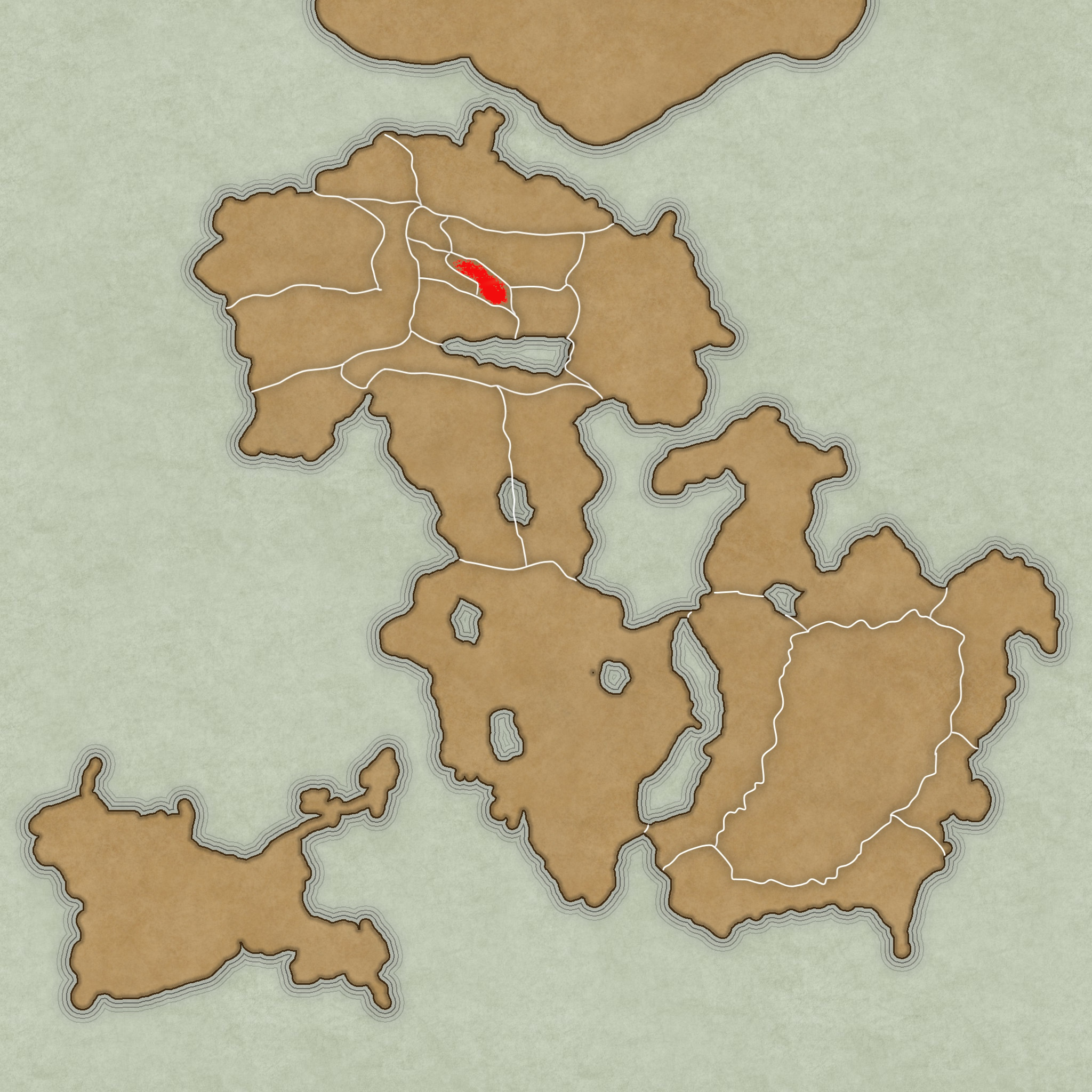
The Elven Plains are home to the enigmatic and free-spirited Wild Elves, a people known as much for their laughter as their secrecy. To the untrained eye, these wide grasslands might seem empty—just rolling hills, scattered groves, and distant lakes—but in truth, the land is alive with hidden villages, shifting camps, and the quiet watchfulness of elves who have made this place their sanctuary.
Unlike their Elder or Blue Elf cousins, the Wild Elves refuse permanence. Their villages move every one to two years, leaving behind only overgrown paths and half-hidden shrines. This nomadic pattern is not aimless—it’s a deliberate strategy of survival and misdirection. No outsider ever truly knows how many Wild Elves exist or where they will be tomorrow.
To newcomers, their ways may appear chaotic: public brawls that end in shared laughter, animals treated like equals, and governing figures who insist they’re just visiting cousins. But beneath the revelry lies a deeply bonded people, fiercely loyal to one another and their mysterious god, Cendor Elderleaf.
The true origins of the Wild Elves are wrapped in mystery—and they seem content to keep it that way. Ask a Wild Elf where they came from, and you're just as likely to be told they were born from a hummingbird's egg or stepped whole from a sunset as you are to receive any kind of serious answer. Their favorite reply is a cheerful lie followed by a laugh and the phrase, “You got it! That’s exactly right!”
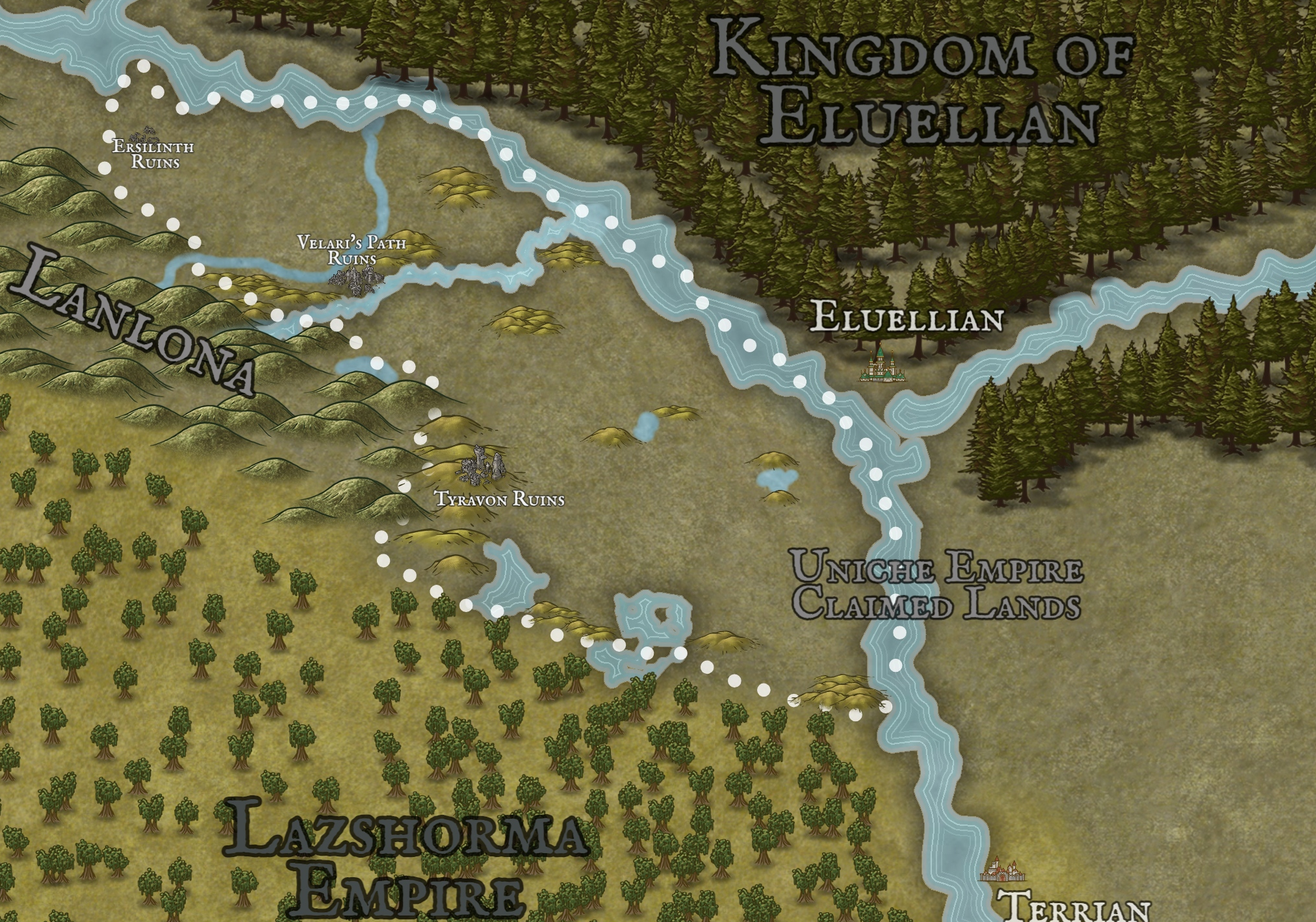
Despite their misdirection, ancient records—primarily those kept by the Elder Elves—offer glimpses into the truth. Around 90 years after the destruction of Tenarian Flats and shortly after the Elf-Lizardman War, the Elder Elves encountered a new, unfamiliar elven people living near the Wide River. They were wild, spirited, and completely unbound by the traditions of their kin.
At the time, rumors circulated of three massive skyships crashing into the Wide River, leaving behind broken hulls, scattered wreckage, and strange technology. Off-world scholars believe these vessels were once Illithid Dreadnoughts, used by the mind-controlling Illithid to transport their elven slaves across dimensions. The theory holds that the Wild Elves were once captives aboard these ships—liberators of their own fate, who overthrew their masters in the chaos of a dying realm and piloted their prison-ships to the nearest habitable world. Some ruins in the plains still bear faded purple paint and the iconography of the Illithid: tentacled faces, curling script, and psychically charged stones now long inert.
Following their arrival, the Wild Elves established three great cities, built from stone and timber salvaged from the crashed vessels and shaped by the hands of free people. However, the Orcish Wars soon began, sweeping across the southern lands. The Wild Elves, new to this world and isolated from its alliances, were caught unprepared. One by one, their cities fell—some in battle, some abandoned, others lost to time and infighting.
After the war, the Uniche Empire claimed the Elven Plains as part of its expanding territory. However, the empire lacked the forces or resources to hold the land, and the Wild Elves simply ignored the claim, melting into the grasslands and reclaiming the freedom they so fiercely protected. To this day, the Uniche Empire continues to mark the Elven Plains on its maps, but not a single outpost or garrison survives there.
In response to the repeated losses of their fixed settlements, the Wild Elves adopted a deliberate strategy of transience. They began building mobile villages—constructed to be dismantled and relocated within a day—and rotating through abandoned sites scattered across the plains. A village is rarely inhabited longer than two years. This practice not only hides their true numbers, but makes tracking or invading them nearly impossible. It also limits large-scale agriculture and infrastructure, forcing them to rely on hunting, foraging, and seasonal trade with Lanlona via Hyssen’s Crossroads.
Today, the Wild Elves remain an enigma to outsiders. Some view them as primitive; others see them as survivors of unspeakable trauma with wisdom forged in hardship. Scholars continue to debate their origin, their leadership, and even their purpose. But for the Wild Elves, none of that matters. They are here. They are free. And that is all the history they need.
Tyravon: Tyravon was the largest and most fortified of the Wild Elf cities, built on a high ridge overlooking a shallow lake that once provided fresh water and fish year-round. The city was surrounded by a ring of standing stones, each etched with runes that scholars believe were meant to repel mind-affecting magic—perhaps a remnant of the Wild Elves’ former enslavement. Tyravon held out longer than the others during the Orcish Wars, and many believe it was here that the elves made their final stand before abandoning their city-based lifestyle.
Today, Tyravon is partially intact. Moss-covered watchtowers, sunken courtyards, and shattered bridges remain. Wild Elves sometimes return to the ruins during solstices to conduct silent rites, though they never stay long. Orc warbands and goblin squatters have been known to claim the ruins during the dry season, leading to intermittent skirmishes. Rumors persist of a sealed chamber beneath the central plaza—said to house the last surviving fragment of a psychic engine once used to navigate their dreadnoughts.
Velari's Path: Built along a natural migration route between two major river valleys, Velari’s Path was the most traveled and cosmopolitan of the Wild Elf cities. It was here that early trade with Lanlona began and where the Wild Elves first experimented with integrating foreign knowledge into their own practices. Circular plazas, spiral-cut amphitheaters, and low buildings with large communal spaces suggest it was once a place of learning, music, and diplomacy.
Now, the city is little more than broken stone trails and vine-choked colonnades. The central plaza is still recognizable, though its once-polished surface is cracked and weatherworn. The city has been overrun multiple times—by human raiders, scavengers, and even cultists seeking solitude. Strangely, travelers report a lingering presence in the ruins. Sounds echo oddly, and voices carry farther than they should, leading some to believe the city still “remembers” what was spoken there. Wild Elves rarely speak of it.
Ersilinth: The smallest and most mysterious of the three, Ersilinth was nestled in a low basin surrounded by wildflowers, stone terraces, and shallow pools. Designed as a city of contemplation and rest, it was built without walls, and its layout followed the natural curve of the land rather than a rigid plan. Legend claims it was founded by survivors of a psychic collapse—elves who had rebelled against their Illithid masters through sheer will alone and needed a place to heal.
Unlike the other cities, Ersilinth did not fall to external enemies. According to Wild Elf oral traditions—rarely shared with outsiders—the city was abandoned voluntarily after a series of strange dreams, violent fevers, and unexplainable disappearances afflicted the population. Some believe a leftover presence from the crashed dreadnought still lingers beneath the ground, warped and dormant but hungry.
Today, Ersilinth is a field of sunken foundations, overgrown pools, and whispering breezes. No Wild Elf willingly visits it. Even goblins and bandits seem to avoid the place. Flowers bloom here even in the dead of winter, and no birds ever sing above it.
Among the Wild Elves, it is rare for any individual to stand above the collective—but a few names persist across stories, sightings, and whispered tales shared between travelers. Chief among them is Thalren Laughing-Root, a figure as elusive as he is respected. Often seen passing through multiple villages, Thalren is greeted with subtle deference and quiet nods. Some believe he is part of the elusive central authority, yet when asked, he simply laughs and claims to be “just a delivery boy.” Despite his elder appearance, he moves with the grace of youth and wears a sash embroidered in shifting patterns of bark and leaf, a symbol none have explained.
Another widely recognized figure is Nessari of the Painted Winds, a spiritual guide and guardian of the mobile shrines dedicated to Cendor Elderleaf. Traveling with a beast-drawn caravan adorned with woven symbols, Nessari is known for her painted skin, calm demeanor, and uncanny ability to "hear the soil whisper." Her blessings are sought before migrations, and her presence at seasonal gatherings lends a sacred air to even the rowdiest festivals.
In contrast stands Koril Flame-Tooth, the renowned brawler and entertainer whose name is often shouted during public duels. Known for his boisterous nature and unmatched record in non-lethal fights, Koril claims he only fights to teach humility and collect copper rings. His cloak of brightly dyed flax strips is a tapestry of his many victories, and while some view him as a clown, others whisper that his cheerful grin hides a mind far sharper than his fists.
Roaming further than most is Yessa Wind-Follow, a quiet elf always accompanied by a retinue of animals—a hawk, two hounds, and a near-silent deer. She is beloved by her kin for protecting animal companions and feared by outsiders for her merciless stance against slavers and animal abusers. Though she rarely speaks to people, her bond with beasts is so strong that some say she can call any creature she's ever fed. Her bronze whistle, worn on a hemp cord, is never far from her lips.
Finally, there is Alarel, “Son-of-the-Son”, a cryptic figure sometimes seen entering abandoned villages or inspecting old ruins before they are reclaimed or moved on from. He is rumored to be the child—or grandchild—of Thalren Laughing-Root, though such claims are always met with bemusement. Alarel speaks little, keeps to the fringes, and insists he is nothing more than a wandering potter. Yet the copper-threaded ledger he carries, inscribed in the Wild Elf script, looks far too well-guarded for mere recipes.
| Population | Estimated 30,000–50,000 (uncertain due to village relocation) |
| Capital City | None (villages rotate every 1–2 years; no fixed capital) |
| Government Type | Unknown decentralized authority, possibly a nomadic council |
| Leader | Unknown; authority figures observed but never confirmed |
| Military | No formal army; all adults trained in archery, guerrilla tactics, and survival |
| Allies | Lanlona (via trade at Hyssen’s Crossroads) |
| Enemies | Uniche Empire (claims the land but has no presence) |
| Races | 100% Wild Elf |
| Language | Wild Elven (oral dialect), Common (used for trade) |
| Currency | Trade-based economy; prefers barter or copper-weighted tokens from Hyssen’s Crossroads |
| Corruption Level | Unknown; suspected to be extremely low due to communal culture and mobility |
| Primary Religions | Cendor Elderleaf (exclusive deity; worship is decentralized and shrine-based) |
| Banned Religions | None offically banned. |
| Guilds | None formally registered; recurring groups include the Knotbearers, Keepers of the Whispers, Rilltide Tandem, and Circle of Green Silence |
The Circle of Green Silence
This elusive group is known for appearing shortly before or after a village relocation. Outsiders often notice their quiet patrols around newly abandoned or newly occupied settlements. Dressed in shades that perfectly match the grasses and low shrubs, they move without sound and are often mistaken for spirits. Some believe they scout ahead and cleanse locations of spiritual residue or hostile presence. Others suspect they are record-keepers of some kind, silently monitoring movements and history. No one has ever seen more than six together at once, and they vanish as swiftly as they appear.
The Knotbearers
Often found at public festivals, brawls, and seasonal gatherings, the Knotbearers are Wild Elves who wear symbolic sashes or braided cords on their belts and clothing—each knot representing a challenge faced, a duel won, or a story earned. They act as facilitators of competition, instigators of friendly rivalry, and organizers of games. While never seen enforcing rules, they somehow maintain order amid chaos. Outsiders suspect they serve as mediators and peacekeepers, settling scores with laughter or bruises depending on the need.
The Keepers of the Whispers
These soft-spoken Wild Elves are rarely seen during daylight. They maintain the mobile shrines of Cendor Elderleaf and are known to sing or hum wordless tunes when alone near trees or springs. Outsiders note that wherever these Keepers go, animals gather, weather shifts gently, and peace seems to linger. Many believe they are spiritual guides or mystics who pass unseen among the villages, preserving ancestral wisdom and the link to the divine. Some have claimed they act as judges when disputes cannot be settled through wine or fists.
The Rilltide Tandem
A group not tied to any village, the Rilltide Tandem are always seen traveling waterways in pairs—small, flat-bottomed boats guided by poles or oar. They ferry elves and goods across the Elven Plains' lakes and streams, especially during relocations. Their boats are colorfully decorated and always bear small animal companions onboard. Some Tandem members are known to carry stories from village to village, while others are feared for delivering omens or messages that lead to abrupt migration. Outsiders believe they are couriers, messengers, and perhaps even envoys of the elusive central authority.
Though the Wild Elves of the Elven Plains are elusive and nomadic, they maintain regular trade through Hyssen’s Crossroads, a neutral trading facility operated by the Blue Elves of Lanlona. Their semi-annual or annual presence ensures a steady supply of handcrafted goods and essential imports without compromising their mobile lifestyle.
Exports
- Flax and wool textiles (lightweight, embroidered, naturally dyed)
- Handwoven canvas shoes with cork or wooden soles
- Copper and bronze jewelry with semi-precious stones
- Herbal tinctures, poultices, and natural oils
- Decorative pottery and clay animal carvings
- Braided ritual cords used in rites and festivals
- Whistles and wind chimes tuned to mimic natural sounds
- Polished totems of animals, trees, and Cendor Elderleaf
Imports
- Forged metal tools, arrowheads, and cooking implements
- Glass jars, lenses, and vials
- Exotic spices and teas
- Durable wool, canvas, and dye additives not found locally
- Beads, bells, and decorative metal fittings
- Soap, salt bricks, and tanning agents
- Paper and writing materials for elder record-keepers
- Basic medicine kits (splints, antiseptics, binding cloths)
Wild Elves avoid items tied to infrastructure or excess waste, favoring goods that are portable, natural, and durable. Despite their secrecy, they are regarded as reliable and culturally rich trade partners at Hyssen’s Crossroads.