About
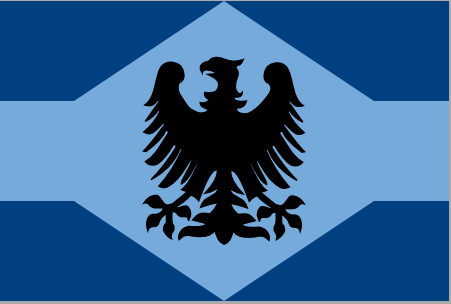
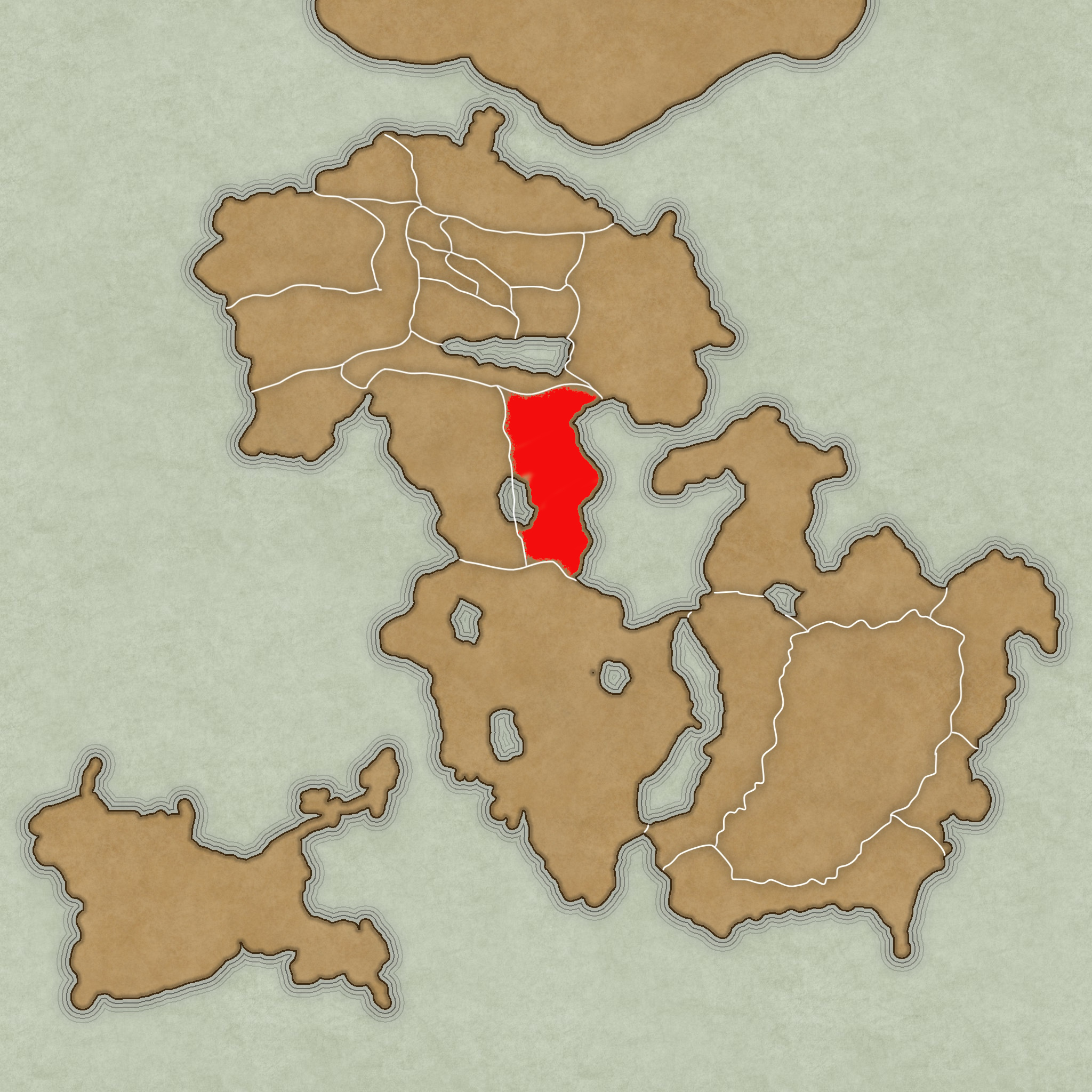
The Republic of Gult is a thriving, trade-focused nation located along the eastern coast of the continent of Garaga. Known for its bustling markets, vast inland lakes, and impressive seaports, Gult values commerce, craftsmanship, and education above all else. Its cities range from inland farming and ranching hubs to coastal centers of shipping and fishing, all connected by a strong cultural emphasis on trade as both a way of life and a path to personal advancement.
Gult’s people are practical and industrious. Rather than pursue military glory or arcane tradition, citizens are trained from a young age in useful trades—carpentry, weaving, fishing, metalwork, and dozens more. By adulthood, most have apprenticed in multiple fields and selected one based on performance and preference. As a result, adventurers, priests, and mages are rare here, and those who do exist tend to be older, more experienced, and highly independent.
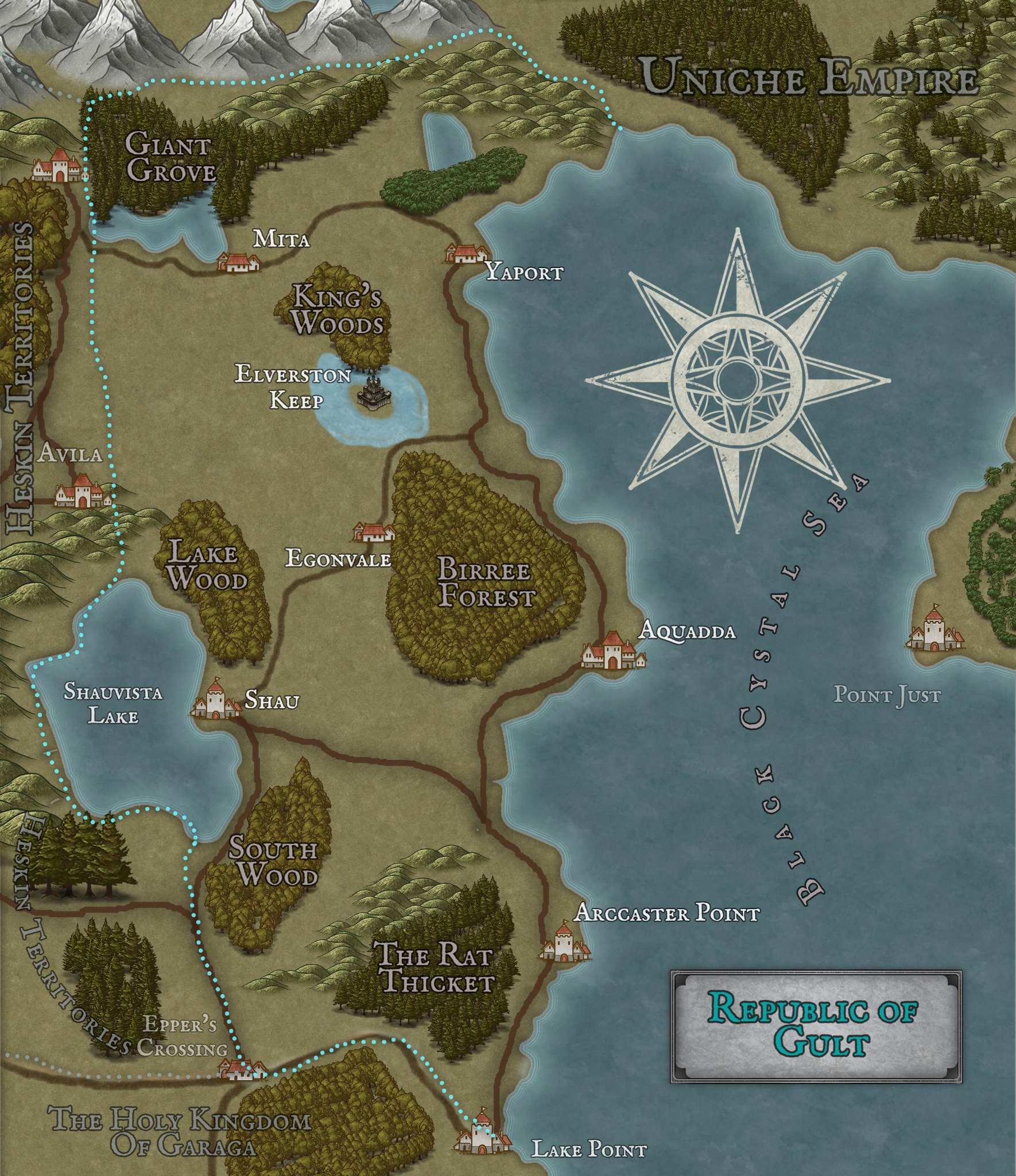
The republic is defined by its geography: snow-capped peaks rich in iron and granite protect the northern frontier, rolling copper-rich hills to the northeast are dotted with military forts, and to the east lies the Black Crystal Sea—home to Gult’s primary seaports and massive fishing fleets. Inland lakes like Shauvista and Elverston provide freshwater resources and vital trade routes, while fertile plains and sprawling forests support agriculture, vineyards, and timber.
Though peaceful and commercially minded, the Republic of Gult is not naive. Its leaders understand the threat of foreign influence and cultic infiltration, and the republic maintains strong border defenses and hidden alliances with neighboring powers. It is a land of quiet resilience, steady growth, and proud independence—a place where wealth is earned, not inherited, and where every citizen is expected to contribute to the republic’s prosperity.
History
The Lost Eras
The early history of the Gult people is largely lost. During the Heskin Expansion, invading forces destroyed cities and cultural institutions, burning libraries and erasing records. What followed was a period of non-education, where even oral traditions fragmented. As a result, the earliest surviving records date back only about 500 years, and these are incomplete and lacking in detail.
The Seven Kingdoms
According to fragmented accounts, the region once hosted seven distinct kingdoms, all beginning with the name “Gult”—a term scholars believe meant “kingdom” or “province” in the original tongue. These ancient kingdoms were independent yet culturally and linguistically linked.
During the Heskin Expansion, the people of Gult were driven into the northeastern hills, bordering the Uniche Empire. The final shift in power came not against the Gult, but the Heskins, who were defeated by the priests of Gyu-Poi in the Battle of Garaga—a conflict that took place in what is now the Holy Kingdom of Garaga. This forced the Heskin forces to withdraw, pressured further by looming threats from the Kingdom of Annadora.
Collapse and Isolation
After the retreat of the Heskin army, Gult survivors attempted to reclaim their lands. However, waves of refugees from the south and Heskin Territories created conflict. The resulting skirmishes and land disputes plunged the region into chaos. Villages isolated themselves for protection, and central authority vanished.
The First New Kingdom of Gult
Over time, a new ruler emerged and founded a Kingdom of Gult that unified much of the north. This reign was marked by border skirmishes with the Heskin Territories. However, the kingdom did not last—its unnamed king was assassinated, allegedly by the Sisters of the Night, likely under contract from either the Heskin Territories or rogue Storm Knights.
The Ageless Scholar
After a generation of collapse, a mysterious figure—a silver-haired scholar in gray robes—rose to prominence. He united the people, established cities, and mandated education for all, introducing systems of literacy and trade training.
He ruled for 100 years without aging, earning reverence from all corners of the region. Just before his disappearance, he established the Republic of Gult, relinquished control, and quietly vanished. His fate remains a mystery.
The Modern Republic
The newly formed republic endured several uprisings, believed to have been instigated by outside powers. These revolts led to the destruction of many historical records, contributing further to the fragmented state of Gult’s past.
Nevertheless, the Republic of Gult stabilized and embraced a unified identity around year 370 (Holy Calendar). It has since developed into a trade-centric civilization, emphasizing education, craftsmanship, and commerce over war or magic. As a result, it produces fewer adventurers than neighboring realms, and its arcane and divine practitioners tend to be older and self-taught.
Notable locations
Elverston Keep – The Island Capital
Built in the center of Elverston Lake, Elverston Keep is the fortified capital of the Republic of Gult. It is accessible only by bridge and boat, and contains layered defenses, elegant trade halls, and the republic's only winery.
The Rat Thicket
A dense, tangled forest east of Arccaster Point, once used by Heskin rebels during border raids. It remains infamous for ambushes and whispers of darker secrets hidden beneath its brush.
Shauvista Lake
A massive freshwater lake straddling the border with the Heskin Territories. Known for its abundant seafood and strange mists, the lake is vital to cities like Shau and South Wood.
The Giant Grove
A majestic forest of towering sequoia-like trees located south of the snow-capped peaks. It is a place of ancient tranquility and spiritual reverence.
The Copper Line Forts
A fortified chain of hill forts guarding the northeastern border against Uniche aggression. These posts maintain signal towers and border patrols year-round.
Notable People
Gressa Tullow
A peasant girl from Egonvale who taught herself to read using discarded parchment and became a vocal advocate for education. She was taken in by scholars from Elverston Keep and later helped standardize trade education across the republic.
Commander Veckar Brodhelm
A career soldier born in the hill forts northeast of Elverston Keep. He was instrumental in reorganizing the border defenses against the Uniche Empire and trained a generation of rangers and scouts.
Sister Anvela of South Wood
Born to woodcutters near South Wood, Anvela left her family to join a small traveling shrine and became one of the Republic's most beloved folk healers and spiritual advisors.
Baron Halworth Drenze of Yaport
A second-generation noble from a powerful fishing and shipping family, Drenze modernized the Yaport dockyards and introduced standardized naval contracts for Gult’s merchant fleet.
Jollen "Ridgeknife" Tharne
Once a woodsman from the southern edge of the Birree Forest, Jollen turned to highway robbery after a border dispute left his family landless. He now leads the Talon Company, a gang of former rangers, deserters, and hunters.
Rannoc of the Forgehill Rebellion
A former apprentice blacksmith turned rebel, Rannoc led a failed workers’ uprising in the mining village of Forgehill 13 years ago. After the local constabulary was overrun, the republic dispatched troops to retake the area.
Pelder "Blueblood" Axtane
A charismatic con artist from Elverston Keep, Pelder forged lineage papers and nearly married into a minor noble house before being exposed. He has since impersonated customs officials, minor clergy, and even a judge.
| Population |
a36,500,000 |
| Capital City |
Elverston Keep |
| Government Type |
Republic |
| Leader |
Lord Titus Elmstone |
| Military |
25,000 standing |
| Allies |
None |
| Enemies |
None. Dislikes: Heskin Territories, Holy Kingdom |
| Races |
Human (50%), Half-Elf (25%), Dwarf (15%), Halfling (10%), , Half-Orc (< 1%), Elf (< 1%) |
| Language |
Common, Elvish, Dwarven, Roulin |
| Currency |
Republic Bar Coins |
| Corruption Level |
20% |
| Primary Religions |
Yanbetso, Tracillue, Ahr, Gyu-Poi, Whimdrom, Po, Cendor Elderleaf, Moradin |
| Banned Religions |
Jungrin, Ret, Cult of Malac, Cult of Gorgodagon |
| Guilds |
Thieves guilds operate in secret |
Notable Organizations
The Ledger Circle
Type: Secretive Civil Network / Arcane-Legal Oversight
Headquarters:Unknown; rumored to operate from beneath Elverston Keep
Role: A clandestine cabal of scribes, mathematicians, and arcane accountants. Their goal is to ensure that no one—guild, noble, or foreign agent—manipulates Gult’s economy through fraud, enchantment, or subversion.
Structure: Members never meet face-to-face. All communication is via coded ledgers, enchanted paper, and anonymous runners.
Notable Fact:Some suspect they were founded by the gray-robed scholar who formed the republic. Their symbol is a closed ledger with a silver clasp.
The Guild of Measured Trade
Type: Merchant Guild / Economic Authority
Headquarters:Elverston Keep
Role: Regulates trade practices, certifies businesses, oversees tariffs, and arbitrates disputes across the republic. It is the economic backbone of Gult’s commercial empire.
Structure: Governed by city-appointed “Tally Chairs,” who represent the guild in national policy.
Notable Fact: Its auditors are trained to detect forged documents and fraudulent transactions—even magical ones.
The Society of Accountable Lore
Type: Educational / Arcane (Non-Governmental)
Headquarters:Shau
Role: A loose collective of scholars, alchemists, and independent arcane researchers who maintain a neutral stance toward magic regulation. They archive practical, scientific, and magical knowledge and serve as unofficial advisors to trade guilds and engineers.
Structure: Members are peer-reviewed rather than appointed. Entry is merit-based and requires submission of a thesis or invention.
Notable Fact: Though not officially sanctioned, the society has hidden laboratories and knowledge vaults, and several of its senior members are rumored to possess outlawed spellbooks or ancient relics
Imports and Exports
Primary Exports
The Republic of Gult thrives on resource processing, agriculture, and trade. Its exports are vital to nearby kingdoms and city-states:
- Agricultural Products
- Grains (wheat, barley, oats)
- Vegetables (carrots, onions, squash)
- Cattle (meat, hides, tallow)
- Olives, figs, lemons, and limes (from Egonvale)
- Freshwater fish, oysters, and freshwater crabs (from Shauvista Lake and Black Crystal Sea)
- Salted meats (from inland ranches)
- Grapes (ten varieties; shipped whole or dried as raisins)
- Crafts and Goods
- Wool and flax textiles
- Woven baskets, rope, and nets
- Carpentry goods (especially from South Wood and King’s Wood)
- Copper goods (utensils, tools, and small trade items)
- Iron and granite (northern mountains; used domestically and sold in block or bar form)
- Trade-schooled artisan crafts (tools, containers, farm implements)
- Manufactured
- Ships and boats (primarily from Aquadda and Arccaster Point)
- Processed foods (pickled goods, dried fruits, and grain meal)
- Trade education services (tutors and scrolls exported to less developed areas)
Key Imports
Due to its limited magical and arcane infrastructure and lack of large-scale industry, Gult relies on foreign trade for many advanced or specialty goods:
- Luxury & Non-native Goods
- Wine (limited production from Elverston Keep)
- Spices (from Boata, Qua, or southern jungles)
- Coffee and exotic teas
- Fine silks and dyed cloth (from Boata and the Uniche Empire)
- Magical items and components (scrolls, potions, arcane reagents)
- Technological and Arcane
- Enchanted tools, weapons, and armor
- Healing potions and divine scrolls
- Books of arcane or divine study
- Alchemical reagents and scientific equipment
- Other Necessities
- Horses and exotic livestock
- Lumber (imported hardwoods)
- Clay and high-quality ceramics
- Gems and refined jewelry